The Breathing Pattern That Changes How Your Rows Feel
Quick Answer: Exhale as you pull and inhale as you lower. Holding your breath through a row fixes the ribcage in an expanded position, which limits how far the shoulder blade can travel across it - and shoulder blade movement is what recruits the lats and mid-back. Most people who cannot feel their back during rows are either breath-holding or pulling with too much weight to control the scapula.
Breathing advice in the gym is usually filed under general technique. For rows specifically it’s a mechanical issue, because the shoulder blade slides across the ribcage - and the ribcage’s position determines what’s available.

Why does breath position affect a row?
Because the shoulder blade doesn’t attach to the spine through a proper joint - it floats on the back of the ribcage.
When you inhale deeply and hold, the ribcage expands and the back of it becomes broader and more domed. The shoulder blade sitting on that surface now has a larger, differently shaped surface to travel across, and full retraction becomes mechanically harder.
When you exhale, the ribcage descends slightly and narrows, and the shoulder blade can retract further and sit down more easily. That end position - retracted and depressed - is where the mid-back muscles are best placed to produce force.
What people usually do instead: take a big breath, hold it, and pull. The result is a row where the arms do most of the work and the shoulder blade barely moves, which produces exactly the complaint of feeling rows in the biceps and forearms.
The correction is small: exhale through the pull. Not a forceful blow - a steady release across the concentric phase, finishing as the elbow reaches its end position.
What is the full pattern, rep by rep?
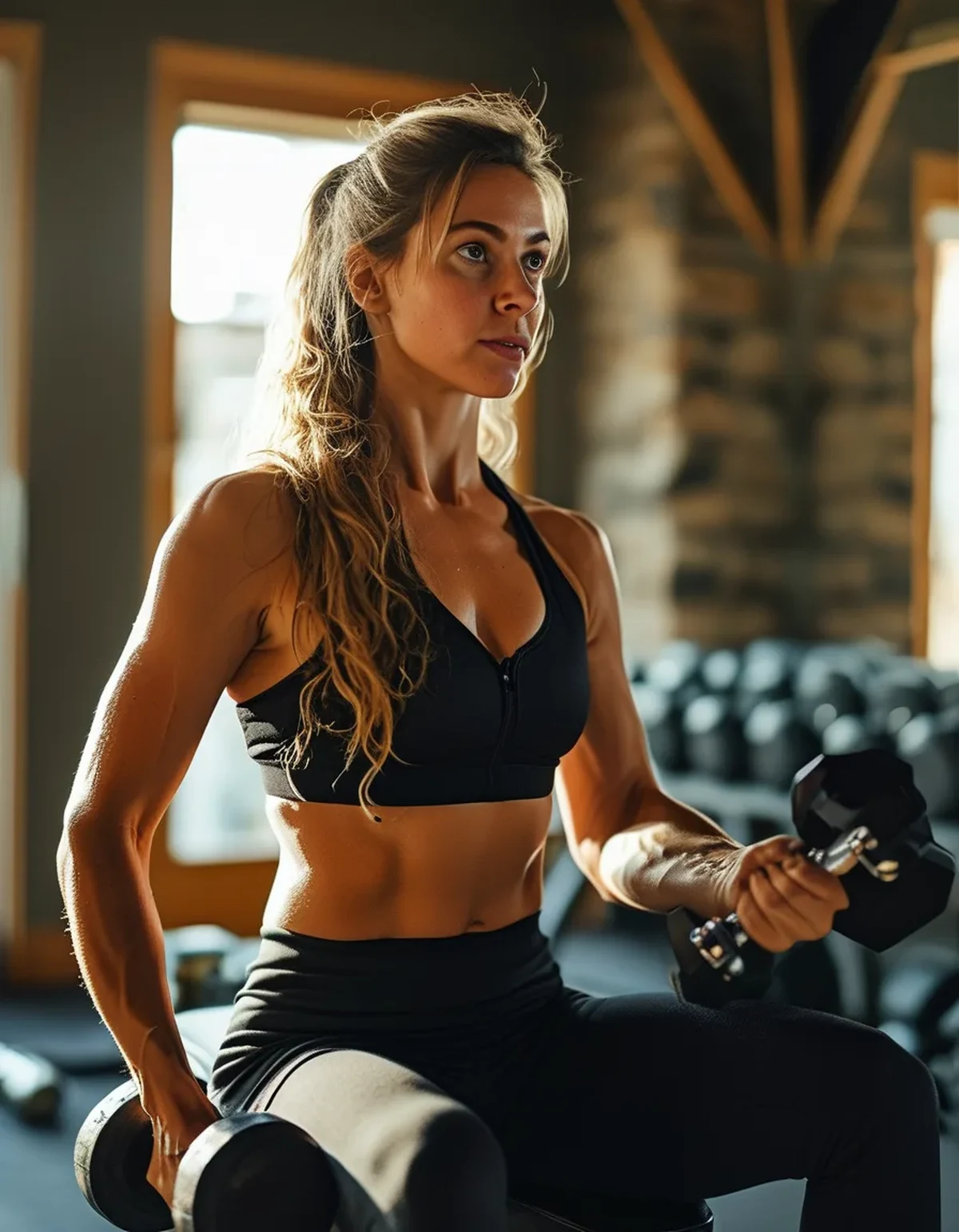
Here’s the sequence applied to a single-arm dumbbell row.
Setup: stand or kneel in position, arm hanging. Exhale fully before the first rep - this sets the ribcage down and is worth doing deliberately.
The rep:
- Inhale as the weight lowers, letting the shoulder blade travel forward with it. Not a passive drop - a controlled reach.
- Brief pause at the bottom, ribs stacked over pelvis, no arching
- Exhale steadily as you pull. Begin the pull with the shoulder blade moving toward the spine, then bend the elbow. The order is the whole point.
- Finish the exhale as the elbow arrives. Hold for one second.
- Inhale as you lower.
Tempo that makes this work: roughly 1 second up, 1 second hold, 2-3 seconds down. Fast rows don’t allow enough time for breath to be part of the movement, which is another reason heavy fast sets tend to feel like arm work.
The scapula-first cue in one sentence: think about putting your shoulder blade in your back pocket before your elbow does anything.
What Nobody Tells You About Bracing and Rows
Three things that seem to contradict the advice above until you see where each applies.
Heavy compound lifts genuinely do use breath-holding. The Valsalva manoeuvre - a held breath against a closed glottis - creates intra-abdominal pressure that stabilises the spine, and it’s appropriate for a heavy deadlift or squat. The confusion comes from applying it to everything, including movements where you want the ribcage mobile.
The dividing line: if the goal is spinal stability under maximal load, brace and hold. If the goal is scapular movement and mid-back recruitment, breathe through it. A heavy barbell row is closer to the first; a controlled single-arm dumbbell row is firmly the second.
Bracing isn’t the same as breath-holding. You can maintain trunk tension while exhaling - the abdominals stay engaged, the ribs stay down, and air leaves. Most people have never separated the two and assume tension requires held breath.
The rib position matters more than the breath itself. What you’re really chasing is ribs stacked over pelvis rather than flared upward. The breath pattern is the easiest route to it, which is why coaching the breath works better than coaching the position directly.
How do you test whether it changed anything?
One session, two sets, same weight.
Set A - your current pattern. Whatever you normally do. 10 reps. Immediately afterwards, note where you felt it, on a scale of 1-5, in three places: biceps, mid-back, lats.
Rest 2 minutes.
Set B - the breathing pattern. Same weight, same reps. Exhale on the pull, scapula first, 2-3 second lowering. Note the same three numbers.
What most people find: biceps drops by a point or two, mid-back rises. If nothing changes, the likely reason is weight - at a load you can’t control, the body will recruit whatever moves it, and the breath pattern can’t override that.
The follow-up test if nothing changed: repeat Set B at roughly 70% of the weight. If the mid-back sensation appears at the lighter load, the original weight was the limiting factor rather than the technique. This is the most common finding, and it’s an uncomfortable one because it means going lighter for a few weeks.
How long before it’s automatic: most people report not having to think about it after about three or four sessions. Until then, saying the exhale out loud - actually audibly - is the fastest way to build it.
FAQ: Breathing and Back Training, Answered
Does this apply to pull-ups and lat pulldowns too?
Yes, and the same pattern: exhale on the pull, inhale on the way down, scapula moves first. Lat pulldowns in particular are frequently performed as an arm exercise for exactly the reasons described here.
What about deadlifts - should I exhale on the way up?
No. Deadlifts are the case for bracing and holding, because spinal stability under load is the priority. Exhale at the top or as the bar returns to the floor, depending on the weight.
I get dizzy during heavy sets. Is that related?
It often is - prolonged breath-holding raises intrathoracic pressure and reduces venous return, which produces light-headedness. If it’s happening regularly, it’s a reason to review your breathing pattern and worth mentioning to a clinician.
Should I be exhaling audibly?
While learning, yes - it’s the simplest way to confirm you’re actually doing it. Once the pattern is automatic it doesn’t matter. Most people quietly go back to holding their breath the moment they stop being able to hear themselves.
TL;DR:
- Exhale as you pull, inhale as you lower - the ribcage position determines scapular travel
- Start the pull with the shoulder blade, then the elbow; the order is the whole technique
- Bracing and breath-holding are different things - you can hold trunk tension while exhaling
- Save the held brace for heavy deadlifts and squats, not for controlled rows
- Test it with two sets at the same weight and score where you feel it
- If nothing changes, the weight is probably the limiting factor, not the breath
If you’ve been chasing a mid-back sensation with more sets and more exercises, this is a change that costs nothing and shows up within one session.
Keep Reading
This article is for general informational and styling purposes only. Fit, sizing, and product availability may vary.