The Strong Back Blueprint: The Muscle Group That Changes Your Whole Silhouette
Quick Answer: A strong back fixes desk-slump posture and reshapes your silhouette using just 5 moves — bent-over rows, lat pulldowns, face pulls, reverse flys, and supermans — trained twice a week, 3 sets of 10-12 reps each. Lead every rep with your elbows (not your hands) and expect visible posture changes within 2-4 weeks.
Here is the plot twist of upper-body training: the muscle group that most transforms how you look and feel is the one you literally cannot see in the mirror. A trained back stands you taller, pulls your shoulders out of the desk slump, balances your silhouette, and makes every backless dress, racerback tank and swimsuit strap sit like it was fitted to you. It is also the antidote to modern posture. Time to train what you cannot see.

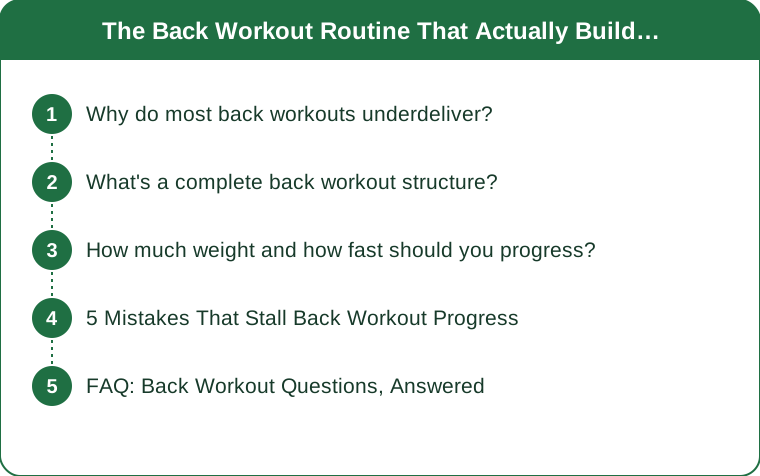
Why is my back losing to my laptop?
Modern life is a conspiracy of forward: driving, typing, scrolling, cooking, carrying. The chest and front shoulders shorten; the upper back muscles — rhomboids, mid-traps, rear delts — stretch out and switch off. The result is the rounded shoulder line you see in every office and the tension headaches that come with it. You cannot stretch your way out alone: the fix is strengthening the pullers so they can win the tug-of-war against gravity and screens. Every row is a vote for standing tall.
Which back muscles actually matter for posture?
Four players matter. The lats — the big V-shaped sheets down your sides — power all pulling and create that waist-framing taper. The rhomboids and mid-traps between your shoulder blades are your posture muscles, squeezing the blades together. Rear delts round out the shoulder from behind. And the erectors along your spine keep you upright all day. Train all four and your back becomes both the frame of your figure and the scaffolding of your posture.

What are the best back exercises for women?
One: bent-over rows (dumbbells or bands) — the king of back builders. Two: lat pulldowns at the gym, or band pulldowns at home, building toward the assisted pull-up. Three: face pulls with a band — the single best posture exercise ever devised, dragging the band to your face with elbows high. Four: reverse flys for rear delts. Five: supermans on the floor for the spinal erectors. Three sets of 10–12 each, squeezing your shoulder blades like they are trying to hold a pencil.
What’s a simple weekly back workout plan?
Twice a week, 20 minutes: Day one — rows 3x10, face pulls 3x15, supermans 3x12. Day two — pulldowns 3x10, reverse flys 3x12, and a farmer carry finisher for the erectors and grip. The magic cue for every rep: lead with your elbows and think squeeze, not pull. If your biceps tire first, you are arm-pulling — slow down, lighten up, and find the shoulder blades. When 12 reps come easy, the resistance goes up. Progression is the entire program.
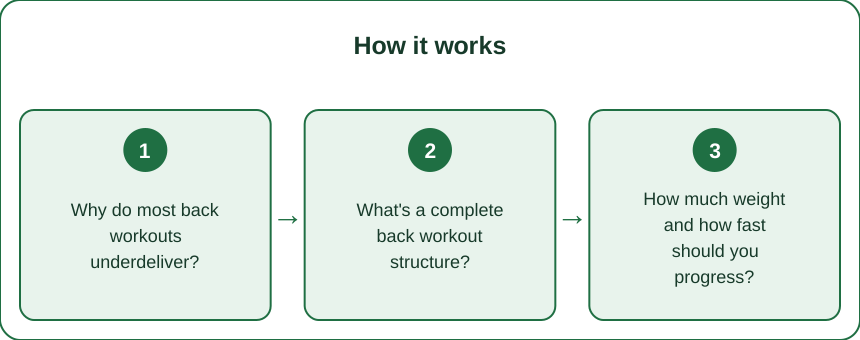
5 Mistakes Everyone Makes Training Their Back
1. Pulling with the arms instead of the shoulder blades. If your biceps burn out first, you’re arm-pulling — slow down and refocus on the squeeze.
2. Skipping face pulls. They look unglamorous but do more for visible posture than almost any other single exercise.
3. Never progressing the resistance. If 12 reps feel easy, the weight needs to go up — otherwise the muscles stop adapting.
4. Training back once a week (or never). Twice weekly is the sweet spot for the postural changes to actually stick.
5. Ignoring the erectors. Rows and pulldowns get the glory, but supermans and farmer carries keep your whole spine upright all day.
What results should I expect and when?
Week two: your awareness changes — you catch yourself slumping and correct it, because those muscles finally have a voice. Week four: bra-line and shoulder tension complaints quiet down; the face pulls are doing their quiet work. Week eight: the mirror trick — turn sideways, and notice your shoulders resting back where they belong without effort. Racerbacks start earning compliments. And the first unassisted pull-up, whenever it arrives, joins the short list of gym moments women never forget.
FAQ: Back Workout Questions, Answered
Q: How long until I notice posture improvements? Awareness changes within 1-2 weeks; visible posture shifts typically show up around week 4-8 of consistent training.
Q: Do I need a gym for these exercises? No — resistance bands at home cover all five moves; a gym just adds machine variety for pulldowns and rows.
Q: Can back training help shoulder or neck tension? Yes — face pulls and rows directly target the muscles that, when weak, contribute to that tight upper-trap and neck tension from desk work.
TL;DR:
- 5 moves: bent-over rows, lat pulldowns, face pulls, reverse flys, supermans
- Twice a week, 3 sets of 10-12 reps, lead with elbows not hands
- Expect posture awareness in 1-2 weeks, visible change by week 4-8
- Progress the resistance once 12 reps feel easy
Your back is the rare muscle group where strength, health and aesthetics all cash the same check: train the pullers, and posture, pain and silhouette improve together. Two sessions, five moves, lead with the elbows. In eight weeks the mirror will show you what you built — indirectly, the way back progress always arrives: in how you stand, and in how everything you wear suddenly fits your new frame.
See It in Motion
Seen here: UPF 50+ Short Sleeve Rashguard Swim Shirt — shop it on bubblelime.com
Keep Reading
This article is for general informational and styling purposes only. Fit, sizing, and product availability may vary.