Tote Bag Shoulder: What Your Bag Is Doing to Your Back
Quick Answer: A two-strap backpack is better for your back than a one-shoulder tote because it spreads weight evenly across your body instead of forcing your spine and traps to compensate for lopsided load. If you stick with a tote, keep it under about 10% of your body weight, switch shoulders often, and strengthen your back so it can handle the load either way.
Somewhere in your tote right now: a laptop, two water bottles, a mystery charger, and a paperback you finished back in May. Total weight: roughly a small dog. Carried on: one increasingly opinionated shoulder. Let’s talk about tote bag shoulder before it starts talking to you — usually in the form of a dull ache that shows up by 3pm.

Why does carrying a bag on one shoulder hurt your back?
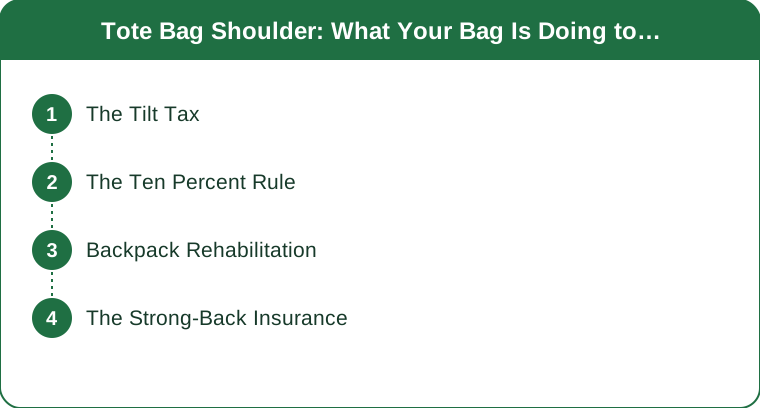
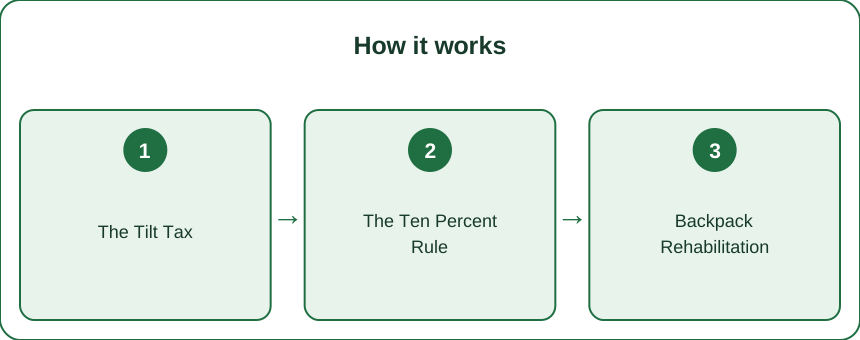
When you sling a heavy bag over one shoulder, your body doesn’t just let it hang there evenly. Your spine leans slightly away from the weight to balance it, and the trapezius muscle on that side clenches to keep the strap from sliding off. Multiply that by hours of wear and you’ve basically been doing a sideways plank all day — except nobody warned you it was a workout.
Over time, this asymmetrical loading pattern can lead to:
- Uneven shoulder height, with the carrying side sitting slightly higher.
- Tight, sore traps and neck muscles on the loaded side.
- A subtle lean or tilt in your posture that becomes a habit even when you’re not carrying anything.
The bag is essentially doing asymmetrical strength training you never signed up for, and unlike a real workout, it never alternates sides on its own.
How much should your bag actually weigh?
There’s a simple benchmark worth knowing: bag weight should stay near 10% of your body weight. For a lot of people, that lands somewhere in the 15-to-20-pound range, though it scales with your size.
Here’s the audit that actually works: dump the entire bag out on your bed, marvel at the mini-archaeology dig you just performed, and evict anything you haven’t touched in the last month. Common offenders:
- A second (or third) charger you forgot you packed.
- An extra water bottle riding shotgun with the one you actually use.
- Books, papers, or “just in case” items that haven’t seen daylight in weeks.
Cutting even a pound or two of dead weight makes a noticeable difference by the end of a long day.

Is a backpack really better for your back than a tote?
Yes, from a pure ergonomics standpoint. Two straps distribute weight evenly across both shoulders and the whole back, instead of concentrating it on one side. That symmetry is exactly what quietly ended the backpack-versus-tote debate for anyone who’s dealt with recurring shoulder or neck tightness.
And backpacks have gotten genuinely stylish while nobody was paying attention — this isn’t the bulky school-issue version anymore. If you’re not ready to give up the tote entirely, you can still manage the risk:
- Switch shoulders on a regular schedule, like a metronome, instead of always favoring your dominant side.
- Shorten the distance the tote actually rides on your shoulder — swap to a crossbody or handheld carry for part of the trip.
- Choose a wider strap when possible, since it spreads pressure over more surface area than a thin one.
Can exercise offset the damage from a heavy bag?
To a real degree, yes. Rows and carries — the classic strength moves that build your upper back and grip — make any bag feel lighter, because a trained back simply shrugs off loads that would wreck an untrained one. Think of it as insurance: the same 15-pound tote that flattens someone with a weak upper back barely registers for someone who does a couple of strength sessions a week.
The best long-term bag ergonomics isn’t a specific bag at all — it’s a back strong enough that the bag stops being the deciding factor.
When is bag-related back pain worth seeing a doctor about?
Most tote-shoulder discomfort is muscular fatigue and resolves with lighter loads, better habits, and some strengthening. But it’s worth checking in with a doctor or physical therapist if you notice numbness or tingling down an arm, pain that doesn’t ease up on rest days, or a visible, persistent difference in shoulder height that isn’t improving. Those can signal nerve involvement or a mechanical issue that’s worth ruling out professionally rather than just switching bags and hoping.
5 Mistakes Everyone Makes With Their Bag
- Never emptying it. Bags become junk drawers you carry on your body — the “just in case” items rarely get used but always get carried.
- Always using the same shoulder. Even a lighter bag becomes a problem if it’s always on the same side, day after day, year after year.
- Buying a bag for looks, not straps. A thin, narrow strap concentrates pressure into a painful line instead of spreading it out.
- Ignoring early warning signs. A little tightness by afternoon is your body’s early notice — waiting until it’s a real ache means you waited too long.
- Skipping upper-back strength work entirely. A strong back makes every bag feel lighter; a weak one makes even a light bag feel heavy by 5pm.
Mini FAQ
Is a backpack always better than a tote bag for your back?
For heavier daily loads, yes — two straps distribute weight symmetrically instead of loading one shoulder. A tote can still work fine for light, short-duration carries as long as you manage the weight and switch shoulders often.
How heavy is too heavy for a bag?
A useful rule of thumb is keeping your bag near 10% of your body weight. Beyond that, you’re more likely to notice shoulder, neck, or postural strain building up over the course of a day.
Can a heavy bag cause permanent back problems?
Occasional heavy-bag days are unlikely to cause lasting harm, but years of consistent one-shoulder overloading can contribute to muscle imbalances and postural habits that are harder to undo. Catching it early with lighter loads and strength training keeps it from becoming a bigger issue.
TL;DR
- One-shoulder totes force your spine to lean and your traps to clench, creating hours of asymmetrical strain.
- Keep bag weight near 10% of your body weight — audit and declutter regularly.
- Two-strap backpacks distribute load evenly and are the more back-friendly default for heavy days.
- If you keep the tote, switch shoulders often and look for a wider strap.
- Strength training (rows, carries) makes any bag feel lighter by building a back that can handle the load.
- See a professional if you notice numbness, tingling, or persistent shoulder-height differences.
Keep Reading
This article is for general informational and styling purposes only. Fit, sizing, and product availability may vary.