Why Your Back Workout Isn't Fixing Your Posture — Even After Months of Rows
Quick Answer: Back workouts alone often don’t fix posture because posture is also a habit problem, not just a strength problem — you can have strong back muscles and still default to rounding forward at a desk out of pure repetition. Pairing back strength with hourly posture check-ins closes the gap.
Your rows are getting heavier. Your back looks stronger in the mirror. And yet by 3pm you catch yourself hunched over your keyboard exactly like before you started training. That’s not a contradiction — it’s two separate problems wearing one name.

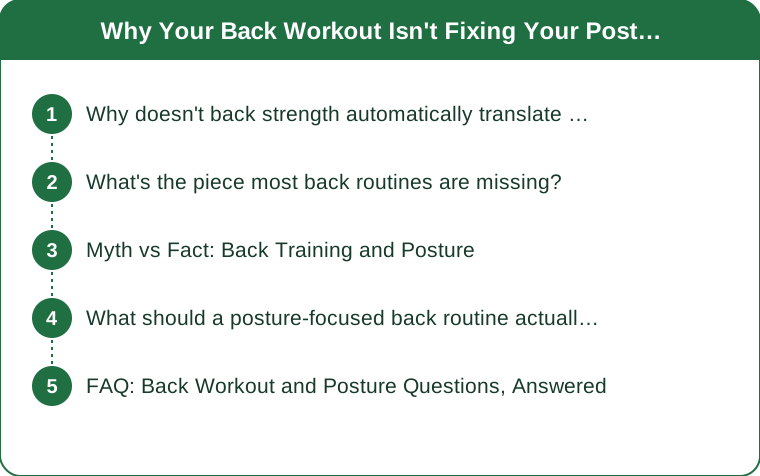
Why doesn’t back strength automatically translate to better posture?
Strength gives you the capacity to hold an upright position — it doesn’t automatically change the habit of which position you default to during 8 hours at a screen. Posture is largely governed by unconscious muscle memory built from thousands of hours of repetition, not by how much weight you can row.
Someone can deadlift and row heavy and still round forward at a desk simply because rounding is the groove their body has practiced for years — the new strength exists, but the old habit hasn’t been actively replaced yet.
What’s the piece most back routines are missing?
Conscious postural check-ins throughout the day — not more exercises. Without a trigger to notice you’ve slumped, the new strength sits unused while old habits run on autopilot.
A simple hourly phone reminder that just says ‘check posture’ does more for daily carryover than adding a fourth back exercise to your routine. The gym builds capacity; the check-ins build the habit that actually uses it.

Myth vs Fact: Back Training and Posture
Myth: Stronger lats and rhomboids automatically pull your shoulders back all day. Fact: Muscles only actively hold a position when you engage them — strength creates potential, not a permanent automatic correction throughout your day.
Myth: More back exercises fix posture faster. Fact: Past a baseline level of back strength, the limiting factor becomes habit and awareness, not additional muscle — doing 6 back exercises instead of 3 doesn’t accelerate postural change.
Myth: A posture corrector brace fixes the underlying issue. Fact: Braces can raise awareness in the short term, but they don’t build the muscle memory needed once you take them off — they’re a training wheel, not a cure.
What should a posture-focused back routine actually include?
Keep 2-3 solid pulling exercises (rows, pulldowns, face pulls) for strength, but add postural endurance holds: a wall-angel hold for 30-45 seconds, or a prone Y-raise held at the top for 3-5 seconds per rep.
These endurance-focused moves train the muscles to sustain a position, which is closer to what all-day posture actually demands, versus a standard row that trains a single strong pull-and-release.
FAQ: Back Workout and Posture Questions, Answered
How long does it take to see posture change from a back program?
Strength shows up in 3-4 weeks; the habit shift that carries into daily life typically takes 8-12 weeks of consistent hourly check-ins alongside training.
Do desk stretch breaks matter as much as the gym work?
Yes — a 60-second stretch break every hour compounds significantly over a workweek, often more than an extra 20 minutes in the gym once.
Is rounded posture always a strength issue?
Not always — sometimes it’s tightness in the chest and hip flexors pulling you forward regardless of back strength. Addressing both sides (strength behind, flexibility in front) works better than either alone.
TL;DR:
- Back strength creates capacity for good posture; it doesn’t automatically change the habit
- Add hourly posture check-ins — they close the gap gym work alone can’t
- Postural endurance holds (wall angels, Y-raise holds) matter as much as strength moves
- Expect 8-12 weeks for daily-life posture to actually shift, not 8-12 workouts
Set one hourly phone reminder this week before adding a single new exercise — it’s the cheapest fix in this whole routine.
Keep Reading
This article is for general informational and styling purposes only. Fit, sizing, and product availability may vary.